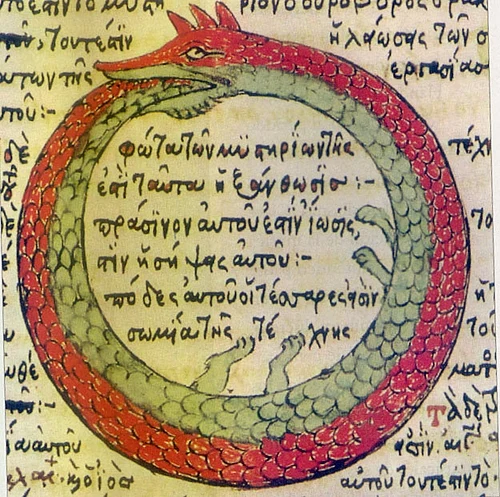
I’ve read Gödel, Escher, Bach twice. It is a long, rich, difficult, entertaining, and fun (for a certain definition of “fun”) book. A central theme is what the author calls “strange loops.” The author tries to motivate (and it is tough to do!) how formal systems can express, but always far short of mastery of these self-referential structures.
Humans are somehow more adept with these structures: Escher with his looped ever-ascending staircases, and Bach’s fugues where the whole and the parts reflect each other. The author tries to cast human thought as neurone structures: a formal, token processing system. So, are we limited by this formalism as is mathematics?
Perhaps, but maybe it doesn’t matter so much. Maybe it matters a lot.
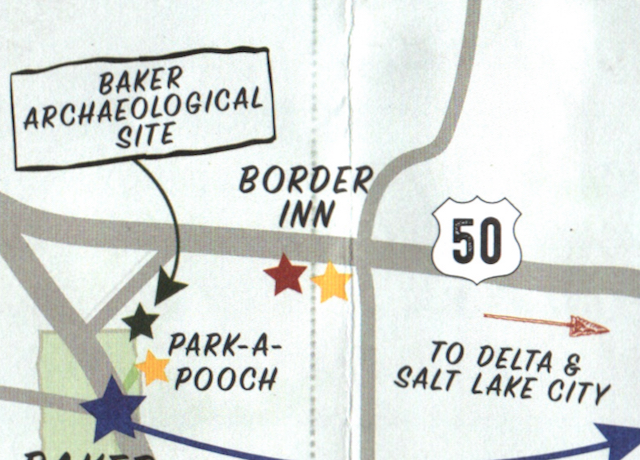
The great road trip across America in 2022 found us in Border, Nevada along U.S. Highway 50.
We had arrived from this morning in Moab, Utah.
During the trip we had taken in Atlanta, Montgomery,
the Gulf Shores, New Orleans, Santa Fe, Arches, and Canyonlands.
Now we were poised to cross Nevada on the
Loneliest Road in America.
After leaving Canyonlands, we had set out across
Utah: spectacular—with a spectacular thunderstorm.
As we approached Nevada however, things became flatter, blander, more of an industrial
farming vibe.
You cross the Nevada border—at Border!—and you have 50 yards to stop and make a
left turn into the gas station. Miss the turn, and you are out of Border and on the way
towards Reno.
I am exaggerating a bit. It is more than just a gas station. Attached to the gas station
(or perhaps the gas station is attached?) is a small shop selling candy, postcards, and beer;
a “casino” comprised of a dozen slot machines; a restaurant that is not always open;
a run down motel (the “Border Inn”, maybe 20 rooms);
and an RV Park (read: a dirt lot where you can park your RV).
So, a “complex” managed by one manager with a cook and waitress for
when the restaurant is open.
Marketing can sometimes be original, but often it’s just more of the same. For example,
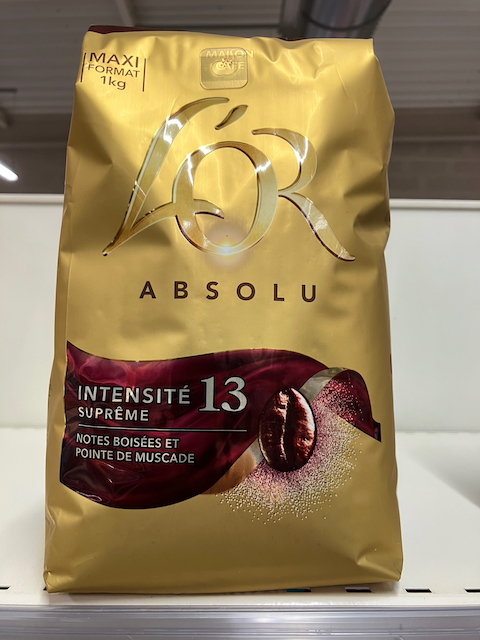
sacks of coffee of various brands have been labeled (starting a few years ago)
with a sort of “strength index”
running up to 10 (I’ve never seen anything less than 5: what’s the point?). A low score
might be described as “mellow”; then scores increase to “balanced”, “robust”, “intense”.
Different brands affix scores (and adjectives) without any apparent coordination.
In an unoriginal but touching tribute to Nigel Tufnel1, here is a package of coffee
seen yesterday at the supermarket.
Yes, it’s a 13. I’m pretty sure no one recently figured out how to make coffee that
much stronger. But, one can not deny that 13 is more than 10.
Somehow, before other people realized just how dangerous TV was, my parents restricted
television viewing: we are talking 30 minutes during the week and 2-3 hours during the
weekend. To be clear: that’s not 30 minutes per day; that’s 30 over 5 days and so on.
This is around 1960. The TV was a new thing. Maybe they were just being cheap: less viewing
means the set would last longer?
When us kids were sick in bed, the TV rules were (greatly!) relaxed: TV all-day-long.
And even though I was only around five years old, two shows still remain etched in my brain: Romper Room and Captain Satellite.
At four years old, our family moved into a house designed by my uncle: a young architect.
The price was right, but in return he had complete creative control: the design, materials, construction.
It was—is—spectacular: redwood siding complementing the surrounding trees,
huge sections of glass, and canopy roofs that kept you guessing what was inside
and what was outside.
Rooms with ceilings two and half stories high with everything going up like, well, trees.
At—and I’m not at all sure about this—around 14 years old, I stumbled upon an ad for an electric typewriter.
It was an ad in a magazine or something. There was a coupon you could fill out and mail in. A Smith-Corona.
If you filled out the coupon, they would send you the typewriter. If you didn’t like it, you could send it back within 30 days. If you decided to keep it, you could pay in three instalments of, let’s say, $89 each.
“The pen was an archaic instrument, seldom used even for signatures, and he had procured one, furtively and with some difficulty, simply because of a feeling that the beautiful creamy paper deserved to be written on with a real nib instead of being scratched with an ink-pencil.” – 1984, George Orwell
Apparently, Winston took his time before finally launching into his diary. So have I.